

COP30 offered both optimism and stark reminders of how uneven global climate action remains. Here we take a closer look at the progress made, the voices missing, and the barriers still holding us back from a sustainable future.
Are we moving towards sustainability, or are we just hoping?
The biggest takeaway from COP30 in Belém, Brazil, came from UN Climate Change Executive Secretary Simon Stiell. He proudly announced that, for the first time, the world is finally “bending the curve of the planet-heating emissions downwards.” It was a big moment. A statement that makes you realise just how much pressure has been building over the past few years.
Clean energy sources like solar and wind aren’t just being seen as alternatives anymore. Slowly, they’re becoming some of the cheapest forms of electricity available. According to the UN Secretary-General António Guterres, this marks the start of a renewable revolution. The beginning of the end for fossil fuels. But, with everything happening around the world, is this just wishful thinking?
One message that echoed clearly at COP30 was that sustainability is a shared responsibility. Every single country, industry, and sector needs to act. It can’t fall on one group while everyone else waits around to see what happens, and to place blame. If we want things to change fast, then everyone needs to play a part.
In 2024, global investment in clean energy reached around $2 trillion (USD). That’s a huge increase, $800 billion more than what went into fossil fuels. This shows growing confidence in both green technology and innovation, and the hope that the world’s economies can grow sustainably.
However, even with growing investments, the real problem is that the financial support behind global climate efforts still isn’t strong enough to match the scale of the crisis. Finance backing sustainable efforts remains lacklustre.

The climate crisis or the finance crisis?
One of the biggest issues raised at COP30 was the disparity in climate finance. Currently, around 10% of climate finance is reaching developing countries. These countries are often the ones most affected by climate change, even though they’ve contributed the least to the problem presently.
Many of these countries are trying to grow their economies, just as developed countries did years before, but because they lack the funding and infrastructure, they are relying heavily on non-renewable energy sources.
This divide is only getting bigger. Emerging economies will need around $2.4 trillion every single year by 2030 to stay aligned with the 1.5°C pathway of the Paris Agreement. Without serious financial support, developing countries physically can’t meet the global targets being set.
In the run-up to COP30, countries began releasing their new and improved national climate plans (NDCs). Previously released commitments were generally small, but expert analysis now shows that global emissions need to fall by about 60% by 2035 relative to 2019 levels to keep the 1.5°C goal within reach. Because of this, sector-by-sector targets and stronger regulations are becoming much more common, with decarbonisation at the centre of it all.
Can shared responsibility help progress or hinder it?
Liberia was one of the countries that stood out considerably. Under its NDC 3.0, it has committed to reducing emissions by 64% by 2035. 10% of the funding will come from the country itself, while the remaining 54% relies on international support.
On the other hand, during COP30, China has moved away from simply limiting future emission growth to actually planning to reduce its emissions. As the world’s biggest emitter, it’s becoming a major player in clean energy, though the wait for more details on its full NDC is ongoing.
Despite this, comparing China and Liberia shows just how uneven the global landscape is when it comes to climate change and sustainable development. China has much better access to money, technology, and infrastructure. Liberia and similar nations don’t have this on such a scale.

Are we putting politics ahead of principles?
Another big talking point was the United States and its stance on climate action. Donald Trump has previously rolled back more than 125 environmental rules and policies during his presidency, as many other countries were making improved efforts on their sustainability journeys. This came after Joe Biden, the former US president, introduced the Inflation Reduction Act, the biggest climate investment in US history.
Gavin Newsom, the Governor of California and a likely future Democratic candidate, stated that “Trump is temporary“. Newsom suggested that climate progress in the US won’t stop just because of politics. He even went a step further, pointing out that individual states, both Democratic and Republican, are still moving forward with environmental initiatives locally.
Despite this sentiment, America’s approach to climate action has never been consistent. Even before Trump, shifts in US policy have had unpredictable impacts on the country’s sustainability initiatives.
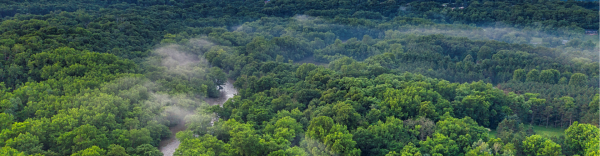
How can we protect our tropical forests?
Scientists widely agree that, in the face of the current climate crisis, improvements are impossible without protecting and restoring natural ecosystems. This is why it was particularly ironic that COP30 was hosted within the Brazilian Amazon.
Tropical forests are among our most important natural resources, but the consequences of deforestation still aren’t taken seriously. Each year, we’re seeing increasingly severe climate impacts, such as the 2024 flash flooding in Valencia and European heatwaves this year causing an estimated 1,500 deaths.
One of the major announcements launched at COP30 was the Tropical Forests Forever Facility (TFFF), which promotes the message that forests are worth more standing than they are cut down. Instead of paying countries after reducing overall deforestation in their nations, the TFFF will pay them for instead keeping forests intact right from the very start.
If implemented correctly, the TFFF could help protect over one billion hectares of tropical forests across more than 70 countries. The challenge, as it has always been, is with money. The TFFF model relies heavily on private investment, which introduces a major risk.
Which voices were missing?
Another concern with both TFFF and COP30 is that neither are giving Indigenous Peoples a strong enough voice. Groups like the Munduruku, who live in the Amazonas, Mato Grosso, and other states in the Amazon, have become increasingly vocal about their fears regarding the growing climate crisis on their land. Nato Tupinamba cried out that “we don’t eat money, we want our free territory“.
During COP30, around 90 Munduruku individuals held a peaceful protest and blocked the Blue Zone entrance for an hour, demanding protection of their territory. They’ve made it clear that they want a seat at the table.
Overall, the TFFF is a big step forward in shifting how the world views forest finance, but without a proper connection to Indigenous communities, the initiative risks repeating past mistakes. Big promises, small impact.
Is this what we wanted?
Yes, COP30 has brought a sense of progress, but beneath the optimism lies a much harder reality. Despite emissions slowly beginning to decline, social and political ties continue to significantly hold back the global climate action plan. How many more COPs are needed until these barriers will begin to be knocked down?
Climate finance remains deeply unequal, and developing nations are expected to meet ambitious targets despite lacking the funding and infrastructure required to achieve them. This raises a crucial concern. How much further can global support realistically stretch, and even more importantly, how much further does it need to?
Nature-based initiatives like the TFFF provide proof of growing recognition of the value of biodiverse ecosystems and tropical forests. Yet, without allowing genuine participation from Indigenous Peoples, these initiatives risk falling into the same patterns of exclusion which had undermined past efforts and led to this divide. Combined with political inconsistency from major emitters, the Paris Agreement goals feel increasingly out of reach.
Ultimately, COP30 has shown that progress is indeed happening, but at a pace too slow to match the crisis’s real urgency.

Ready to start your sustainability journey?
At Baxter Freight, we make it simple to start your journey and provide meaningful strategies to keep your business moving more sustainably. Our Sustainable Freight Network helps you report your emissions with confidence, reduce through smarter supply chain decisions and remove what you cannot avoid.
Whether you’re responding to supply chain pressure or reporting for your own improvement, we’ll help you make credible, measurable progress with carbon-smart logistics.
Our team of experts is dedicated to guiding you every step of the way. We understand that sustainability can seem overwhelming, but we break it down into manageable actions.
Ready to take the next step? Contact our team today, and let’s make your business better with carbon-smart logistics.